NSRP appropriations FY2026: Diplomacy and security funding
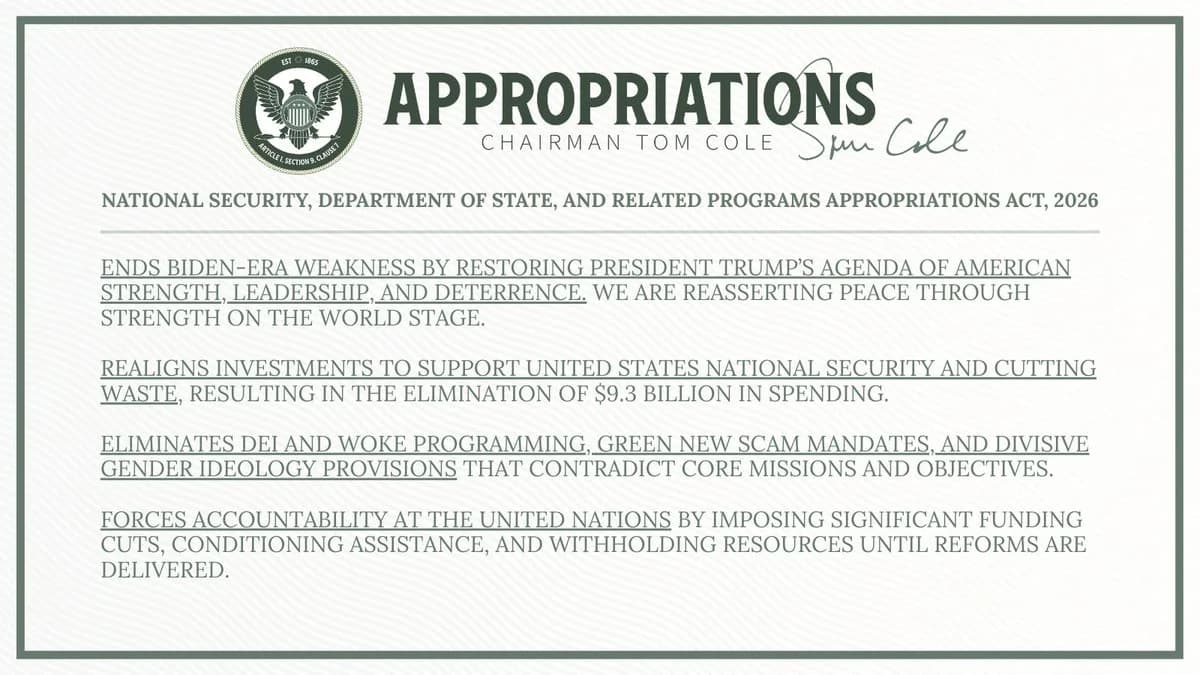
The NSRP appropriations FY2026 saga started to take shape in mid-2025 as Congress moved to set the funding path for U.S. diplomacy, security, and related international programs. On July 23, 2025, the House Appropriations Committee unveiled its FY2026 NSRP bill, formally titled the National Security, Department of State, and Related Programs appropriations measure, or H.R. 4779. The committee’s action marked a critical step in translating the Administration’s international affairs priorities into a formal funding package for the coming fiscal year. The NSRP framework, which funds both the State Department and Foreign Operations accounts, would under this bill amount to a total of $49.97 billion in new budget authority for NSRP accounts, with $15.12 billion designated for the Department of State and Related Agencies and $34.84 billion allocated to Foreign Operations. When rescissions are taken into account, the total NSRP funding would be $46.41 billion. These figures reflect a 6.5% decrease from FY2025 enacted levels and a 58.5% increase from the Administration’s FY2026 request, illustrating the tug-of-war between current-year needs and proposed reforms. (congress.gov)
Even as this plan moved forward, lawmakers faced the practical reality of funding the government in FY2026. In November 2025, Congress enacted a continuing resolution, P.L. 119-37, to keep SFOPS/NSRP-supported federal activities funded at FY2025 levels as negotiations continued on a full-year appropriation for FY2026. The CR extended funding through the earlier of January 30, 2026, or the enactment of a full-year appropriation, providing a crucial pause point for agencies and programs relying on NSRP dollars. This arrangement underscored the ongoing tension between advancing new policy priorities and maintaining operational stability for diplomacy and security programs abroad. (congress.gov)
As readers with a DC-focused, data-driven lens evaluate these developments, the NSRP appropriations FY2026 story unfolds within a broader context. The NSRP subcommittee—the name of which reflects a reorganization of the traditional SFOPS structure—aims to align funding more closely with national security objectives tied to diplomacy, development, and humanitarian operations. This shift has tangible implications for how resources are allocated within Title I (Department of State and Related Agencies) and Title II (Foreign Operations), framing the prioritization of diplomatic security, embassy operations, and international aid programs. The bill’s existing breakdown, captured in official budgetaries and committee reports, provides a precise snapshot of where dollars would flow and how this aligns with or diverges from the President’s FY2026 proposal. (congress.gov)
Section 1: What Happened
NSRP funding level and structure under the H.R. 4779 proposal
Overall NSRP budget authority and its composition
- The July 23, 2025, House Appropriations Committee action on H.R. 4779 would provide 49.97 billion dollars in new budget authority for NSRP accounts. Of this total, 15.12 billion would be for Department of State and Related Agencies, and 34.84 billion would be for Foreign Operations. This is the core funding framework for FY2026 NSRP appropriations. (congress.gov)
- When rescissions of prior-year funding are included, the NSRP total would be 46.41 billion dollars. Not including rescissions, the measure would reflect a 6.5% decrease from FY2025 enacted levels and a 58.5% increase from the Administration’s FY2026 request. These contrasts illustrate the dynamic between maintaining established operations and pursuing new policy priorities. (congress.gov)
The State and Foreign Operations breakdown within NSRP
- The NSRP framework consolidates funding for diplomacy, development, and related security activities into two major blocks: Title I (Department of State and Related Agencies) and Title II (Foreign Operations). The committee’s bill explicitly delineates the allocation across these titles, with the majority of the NSRP total directed toward Foreign Operations. This structure reflects ongoing priorities in international engagement, humanitarian assistance, and related security programs. (congress.gov)
Context: the rebranding of SFOPS to NSRP in the 119th Congress
- The NSRP designation is not just a naming choice; it reflects the House’s reorganization of the SFOPS subcommittee into the National Security, Department of State, and Related Programs (NSRP) subcommittee. This shift, noted by Congress, signals an emphasis on integrating national security considerations with diplomatic and development efforts. The structural change is part of the evolving framework that Congress uses to monitor and adjust international budgeting. (congress.gov)
A key timeline point: the House vote and subsequent steps
- The July 23, 2025, NSRP action by the House Appropriations Committee set the stage for committee-marked and floor actions in the months that followed. While the CRS report emphasizes the committee’s action and the bill’s fiscal implications, it also documents the step-by-step process that would eventually lead to a full-year measure, contingent on broader negotiations within Congress. (congress.gov)
The November 2025 development: a continuing resolution to fund FY2026
- In November 2025, Congress enacted P.L. 119-37, a continuing resolution that funded SFOPS/NSRP-supported federal agencies in FY2026 at FY2025 levels. The CR essentially maintained current-year funding levels through the CR’s expiration, providing stability for diplomacy and related programs during a period of ongoing budget deliberations. The CR extended funding through January 30, 2026, or the enactment of a full-year appropriation. This action illustrates how lawmakers balanced the desire for new policy direction with the practical need to keep essential international programs funded. (congress.gov)
The CR background and its implications for NSRP
The November 12, 2025 enactment and its immediate effect

- The CR’s enactment date—November 12, 2025—placed NSRP activities on a glide path through early 2026 with no new-year-wide authorizations yet in place. This offered departments a measure of continuity for ongoing operations, including diplomatic security, embassy operations, development assistance, and humanitarian programs, while Congress continued deliberations on the FY2026 full-year package. The CR’s language and the accompanying tables illustrate the comparison between requested amounts and enacted FY2025 funding for the accounts within NSRP, highlighting where policy priorities might shift once a final appropriation bill is enacted. (congress.gov)
The underlying policy tensions reflected in NSRP numbers
- The NSRP appropriations FY2026 discussion embodies a broader budgeting debate: how to align diplomacy, security, and development with America’s strategic priorities while managing fiscal constraints. The 6.5% year-over-year decrease relative to FY2025 enacted levels (pre-rescission) suggests a tightening of some traditional lines, even as the overall NSRP budget shows substantial growth from the Administration’s FY2026 request. Observers note that the final articulation of policy goals—whether to emphasize security-centric investments, diplomatic capacity, or humanitarian leadership—will influence any eventual final appropriation. (congress.gov)
The specifics behind the account-level allocations
The two primary NSRP accounts in play
- Title I, Department of State and Related Agencies, and Title II, Foreign Operations, remain the backbone of NSRP. The committee’s bill provides a detailed split that mirrors longstanding international affairs responsibilities, including diplomacy, global health, humanitarian assistance, and international security programs. The precise allocations under H.R. 4779 (and the related tables in the CRS report) give readers a clear map of which accounts would see proportional changes under FY2026 NSRP funding. (congress.gov)
Notable sub-accounts and program areas
- Within the broader NSRP structure, subaccounts such as diplomatic security, civil and public diplomacy programs, and global health and humanitarian accounts play a central role. The committee’s framing includes a focus on diplomatic security, embassy-related funding, and the broader set of foreign assistance programs. The funding levels proposed under H.R. 4779 are designed to address both the continuity of essential operations and the initiation of policy priorities highlighted by the Administration and the Congress. The CRS analysis explicitly notes the allocation patterns and the role of security-related accounts within the NSRP framework. (congress.gov)
What happened in practical terms is that the NSRP appropriations FY2026 process advanced but faced the reality of a continuing resolution that paused final allocations while lawmakers debated a full-year package. That sequence—committee action on H.R. 4779 in July 2025, followed by a November 2025 CR—significantly shaped the operating environment for diplomacy and related programs through early 2026. For DC Times readers, the takeaway is that NSRP appropriations FY2026 were moving through a highly scrutinized budget process, with real-time implications for international engagement, development, and security cooperation during a critical window of foreign affairs operations. (congress.gov)
Section 2: Why It Matters
The strategic importance of NSRP appropriations FY2026
Funding diplomacy and security in a shifting global context

- NSRP appropriations FY2026 underpin the United States’ ability to sustain diplomatic engagement, security cooperation, and development assistance around the world. The House bill’s split—$15.12B for the Department of State and Related Agencies and $34.84B for Foreign Operations—highlights a continued emphasis on foreign aid and international partnerships alongside traditional diplomatic channels. The availability of these funds in FY2026 will influence how fast the U.S. can respond to crises, support allies, and advance humanitarian goals. (congress.gov)
Global health and humanitarian considerations within NSRP
- The NSRP funding landscape includes global health programs and humanitarian assistance—areas that often see close public and professional scrutiny. The House-passed NSRP bill provides a financing framework for such activities, and the CR’s extension maintained continuity in these areas through early 2026. Observers watch how the final appropriation might shape the scale and scope of health and humanitarian programs, including disease surveillance, vaccination campaigns, and disaster relief capacity in key regions. The relevant budget tables show how these program areas are treated within the overall NSRP envelope. (congress.gov)
Operational stability vs. reform: a nuanced balance
- For international programs, the continuing resolution often serves as a stabilizing mechanism, enabling agencies to maintain core functions even as negotiations continue on a broader policy agenda. The NSRP appropriations FY2026 CR, by funding at FY2025 levels through January 2026, aimed to minimize disruption to embassy operations, security programs, and development activities at a moment when strategic priorities could be recalibrated in subsequent legislative action. This balance—between preserving essential operations and pursuing structural or policy reforms—defines the ongoing budget dialogue around NSRP. (congress.gov)
Broader context and competing viewpoints
Fiscal discipline vs. global leadership
- Supporters of the NSRP approach argue that a strong but disciplined funding package ensures U.S. diplomatic leverage and security commitments worldwide, a critical factor in responding to crises and maintaining allies. They may point to the 58.5% increase from the Administration’s FY2026 request as evidence that Congress is willing to fund higher-priority initiatives while maintaining overall fiscal discipline. Critics might emphasize that any decreases from FY2025 enacted levels could constrain embassy operations, security programs, or humanitarian initiatives in high-need regions. The CRS documentation and the enacted CR provide data points for this debate. (congress.gov)
The role of NSRP in national security policy
- The NSRP framework’s emphasis on integrating national security objectives with diplomacy and development is a notable shift in how the federal budget presents and supports foreign policy tools. By highlighting the NSRP subcommittee’s existence and its alignment with security and diplomatic priorities, Congress is signaling a particular view of how foreign operations should be structured and overseen. This has implications for oversight, accountability, and the coordination of international programs across multiple agencies. The budgetary notes and committee discussions provide a window into those interpretive choices. (congress.gov)
Implications for affected stakeholders
U.S. government agencies and personnel

- For State Department and related agencies, the NSRP appropriation FY2026 determines resources for staffing, embassy operations, security, and public diplomacy. While the CR offered continuity through early 2026, the final decision on a full-year appropriation will directly affect hiring, program implementation timelines, and the ability to scale up or reallocate resources in response to evolving global events. The allocation details in H.R. 4779 show where the dollars were intended to flow, which helps agencies plan phase-by-phase implementation. (congress.gov)
International partners and regional programs
- Foreign Operations accounts fund a broad array of development, humanitarian, and security assistance programs with regional footprints. The NSRP numbers for FY2026 will influence the pace and scale of international partnerships, development projects, and crisis-response initiatives abroad. Observers will be watching how Congress negotiates these programs’ funding in the final year package and how that translates into on-the-ground support in partner countries. The committee’s figures provide a baseline for evaluating those potential shifts. (congress.gov)
Public health and humanitarian communities
- Global health and humanitarian funding under NSRP has direct consequences for international health initiatives, disaster relief, and aid programs. The NSRP framework’s allocation to these areas affects how quickly partner countries can respond to health crises, support vaccination campaigns, and deliver life-saving aid. The budget tables associated with H.R. 4779 illustrate the landscape of health and humanitarian funding within NSRP, which is essential for accountability and for NGOs planning operational programs. (congress.gov)
Section 3: What’s Next
Timeline and next steps for NSRP appropriations FY2026
Path to a full-year NSRP appropriation
- The next significant milestone for NSRP appropriations FY2026 is the passage of a full-year SFOPS/NSRP appropriation that supersedes the continuing resolution. The process typically involves reconciling House and Senate measures, addressing policy priorities, and incorporating any administration requests or veto considerations. Given the November 2025 CR, observers should anticipate continued negotiations into early 2026, with potential updates to the NSRP bill text, accounts, and program authorizations as the Congress finalizes the year’s funding. The CRS report and subsequent congressional actions document the legal and procedural steps that accompany this phase. (congress.gov)
Oversight, accountability, and reporting expectations
- As the NSRP appropriations FY2026 process continues, congressional committees are likely to request detailed reporting on how funds are being used, progress on key diplomatic initiatives, and performance metrics for development and humanitarian programs. The NSRP framework’s dual focus on diplomacy and security typically translates into comprehensive oversight requirements across State, USAID, and related agencies. Readers should monitor committee reports, hearing memos, and agency budget justifications for insight into how the final appropriation would be implemented. The CRS analysis and related budget documents provide a baseline for what oversight may look like in practice. (congress.gov)
What readers should watch for going forward
Potential policy shifts and programmatic changes
- A central watchpoint is whether the final FY2026 NSRP appropriation would reflect a continuation of the existing policy directions or if it would embed new priorities, particularly in security assistance, humanitarian response, or governance-focused aid. Although the NSRP numbers highlight a substantial year-over-year difference versus the Administration’s request, the actual policy shifts will manifest in the final bill’s language, report language, and account-level allocations. Keeping in touch with the latest committee actions and budget justification documents will help readers understand how these priorities evolve. (congress.gov)
Budget discipline and long-term planning
- Beyond FY2026, the NSRP appropriations framework will influence longer-term planning for diplomacy and related security programs. The current period—characterized by a CR and ongoing negotiations—underscores the importance of stable funding for critical operations while pursuing strategic policy changes. Observers and stakeholders should expect continued scrutiny of how efficiently funds are deployed and how effectively international programs deliver measurable outcomes. The public budget documents and congressional reports provide the data foundation for this ongoing assessment. (congress.gov)
Closing
The NSRP appropriations FY2026 process demonstrates how the United States balances immediate funding stability with longer-term strategic priorities in diplomacy, security, and global health. The July 2025 House action establishing H.R. 4779, the $49.97 billion NSRP budget authority (or $46.41 billion with rescissions), and the November 2025 continuing resolution placing FY2026 funding at FY2025 levels through January 30, 2026, collectively shape the operating environment for U.S. international engagement during a critical window. For DC Times readers, the stakes are clear: how Congress finalizes the NSRP appropriation FY2026 will influence embassy operations, humanitarian response capabilities, and the United States’ capacity to respond to global crises in the months ahead. As negotiations continue, anyone following this story should monitor official budget documents and committee updates to understand how these numbers translate into real-world support for diplomacy, security partnerships, and global health initiatives. (congress.gov)
Stay informed with ongoing coverage as the final FY2026 NSRP appropriation is resolved. Public-facing budget tables, committee reports, and agency justification materials will be the most reliable indicators of how the funding will actually flow and how policy priorities will be operationalized.