National Geographic Museum of Exploration Opening in DC

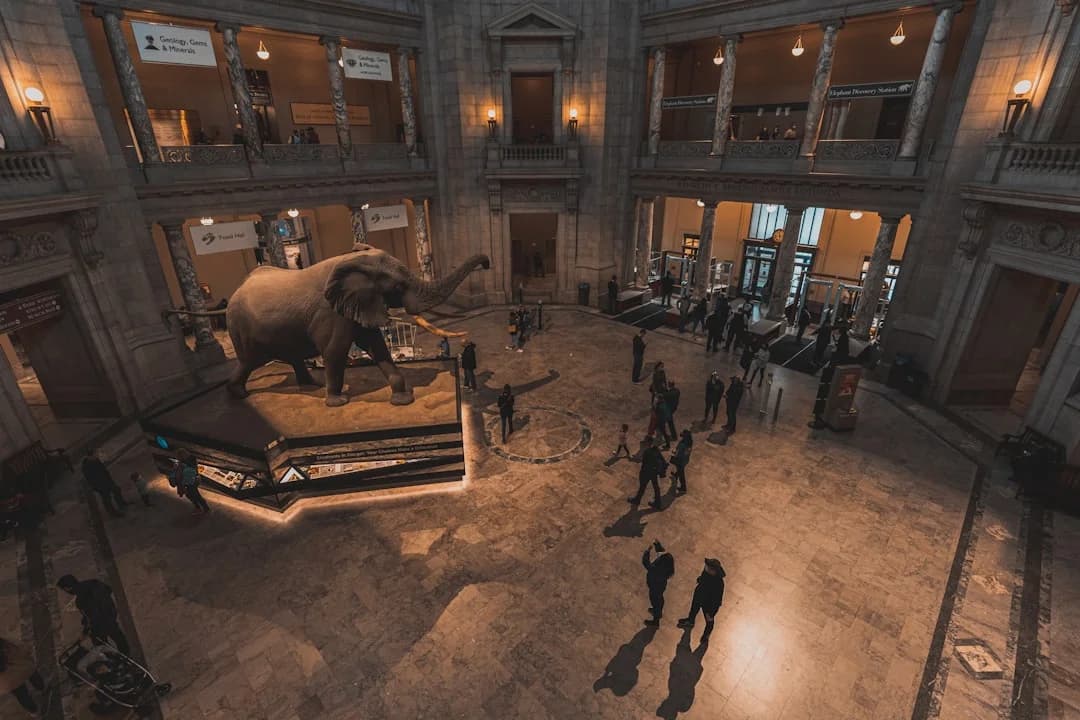
Photo by J. Amill Santiago on Unsplash
The news is clear and timely: the National Geographic Museum of Exploration opening in DC is scheduled to debut on June 26, 2026, at National Geographic Society’s campus in Washington, D.C. This milestone marks a significant expansion of the Society’s public-facing footprint and signals a broader push into immersive, technology-enabled storytelling. In the District of Columbia’s current cultural and tech-forward landscape, the MOE represents more than a traditional museum opening; it’s a case study in how major cultural institutions are aligning exhibition design, digital technology, and audience accessibility to attract a diverse, cross-generational audience. The spectacle and substance of the MOE opening date—June 26, 2026—are confirmed by National Geographic’s own press materials, underscoring the event’s status as a centerpiece of the summer cultural calendar. The opening aligns with a broader wave of museum and science-related infrastructure projects anticipated to transform the District’s “America 250” moment, with the MOE positioned as a flagship attraction on a reimagined campus located at 1600 M Street NW in Washington, DC 20036. (news.nationalgeographic.org)
The MOE’s arrival adds a new, data-rich chapter to Washington’s museum ecosystem at a moment when visitors and residents alike crave immersive, interactive experiences. National Geographic has framed the MOE as a hybrid, where the museum functions as both a public attraction and a technology-enabled platform for education, exploration, and civic engagement. The development comes with a sizable footprint—roughly 100,000 square feet of new and renovated space—and a slate of exhibits designed to blend global storytelling with state-of-the-art technologies. As pre-sale tickets began circulating ahead of the grand opening, observers noted that MOE is aiming to attract a broad audience, including families, students, curious adults, and international travelers. General admission pricing starts in the high-tens of dollars range, with early-bird deals and discounts through partner programs described in advance of the opening. (axios.com)
Section 1: What Happened
Announcement Details
The National Geographic Society formally announced The National Geographic Museum of Exploration would open on June 26, 2026, marking a major milestone in the organization’s 140-year public campus presence in Washington, DC. The opening date and the MOE’s broad ambitions were publicly disclosed through National Geographic’s official channels, reinforcing the significance of this project as part of the organization’s strategic growth and public-engagement initiatives. The press release and related communications emphasized that MOE would inaugurate a new era of exploration-driven experiences on the Society’s campus, with a clear mission to illuminate and protect the wonder of the world through a combination of exhibits, immersive media, and hands-on programs. The venue’s public address and release materials place MOE at the center of a DC cultural scene that has been recalibrating for a post-pandemic era, with increased emphasis on experiential learning and community access. (news.nationalgeographic.org)
The MOE Experience
MOE’s design and programming are being pitched as a blend of cinematic galleries, interactive media, and real artifacts that invite visitors to traverse a spectrum of geographic and thematic explorations. The tentpole galleries and experiences include: Photo Ark: Animals of Earth, a digital exhibit drawn from Joel Sartore’s iconic portraits; Rolex Explorers Landing, a narrative spine tracking exploration from curiosity to discovery across oceans and outer space; The Archives, a deep dive into Nat Geo’s storytelling legacy that blends artifacts with multimedia storytelling; and Explorers Eatery, a global food hall concept designed to complement the visitor journey. In addition, MOE features a large outdoor courtyard with life-sized installations and projection experiences to extend the “nighttime courtyard” concept into the daytime experience. These elements reflect National Geographic’s strategy to fuse storytelling with technology in ways that appeal to both casual visitors and serious students of science and history. The MOE page also highlights accessibility measures, with content available in English and Spanish and options for Braille and American Sign Language, ensuring broader inclusion. (moe.nationalgeographic.org)
Timeline and Key Milestones
The MOE project follows a multi-year development timeline that began with planning and fundraising, then progressed through design refinements, technology integrations, and construction at the downtown DC campus. Public milestones include: the initial public introduction of the Museum of Exploration concept, major partnerships with technology and education providers, and ticketing programs that began ahead of the grand opening. The formal opening is scheduled for summer 2026, with the official date confirmed as June 26, 2026. Pre-opening activities have included ticketing pilots and media previews aligned with MOE’s broader goal of broad accessibility. The MOE timeline also reflects National Geographic’s strategic partnerships, including collaborations with EPAM for advanced technology and with Cengage for educational offerings, all designed to enhance the MOE experience and its educational mission. (news.nationalgeographic.org)
Ticketing and Access
Tickets for the National Geographic Museum of Exploration are part of a broader strategy to balance demand with accessibility. The MOE’s own site indicates that tickets are on sale, with plan options designed to accommodate a broad cross-section of visitors, including families, school groups, and international travelers. In advance of the opening, press materials indicated that presale tickets were available, with pricing described in public releases. A press release from the National Geographic Society communications team and a companion PR Newswire distribution provided more granular pricing details, with general admission starting around $29.99 for adults, and potential discounts available through programs like Museums for All. This pricing framework positions MOE within a competitive field of high-profile urban museums while emphasizing the organization’s commitment to inclusive access. (nationalgeographic.org)
Section 2: Why It Matters
Cultural and Economic Impact
National Geographic’s decision to open the Museum of Exploration on its DC campus represents more than an expansion of exhibit space; it signals a renewed emphasis on experiential learning and public engagement with science, exploration, and storytelling in an era of rapid technological advancement. The MOE project is positioned to draw both local residents and international visitors, contributing to Washington, DC’s stature as a global cultural hub. Local observers note that the MOE’s opening aligns with a broader set of DC-area cultural investments tied to the 250th anniversary of the United States, including new and expanded museums and experiences along the National Mall and in the Golden Triangle neighborhood. As a data-driven and somewhat station-agnostic publication, District of Columbia Times will monitor visitor-volume projections, retail footprint, and the MOE’s pull for daytime vs. evening traffic, as well as any spillover effects on nearby cultural institutions and hospitality venues. The MOE’s size and scope—roughly 100,000 square feet—position it as a major draw in the nation’s capital and as a case study for large-scale museum modernization. (axios.com)
Technology, Education, and Partnerships
The MOE project is notable for its explicit emphasis on technology-enabled learning and immersive experiences. Partnerships with technology providers, including EPAM, are highlighted as integral to delivering advanced, interactive environments that scale across exhibits and experiences. A National Geographic press release from January 28, 2026, describes a collaboration with EPAM to power immersive ecosystems and future-facing educational experiences in MOE, underscoring the project’s commitment to cutting-edge digital storytelling and learning platforms. In addition, MOE has announced expanded collaborations, including a long-term partnership with Cengage to deliver an interactive student experience within the MOE environment. These collaborations are not only about a single venue experience but about creating a replicable educational model for Explorer-driven learning, with potential integration into classroom curricula and digital learning ecosystems. The combination of experiential galleries and partner-driven educational programs is expected to broaden MOE’s reach beyond museum visitation to schools, after-school programs, and lifelong-learning audiences. (news.nationalgeographic.org)
Two additional partnerships deserve attention for their potential impact on MOE’s educational mission. First, MOE has highlighted a grant and archival access expansion as part of Nat Geo’s ongoing philanthropic and scholarly initiatives. The Lilly Endowment grant and related expansions are aimed at expanding access to “The Archives” and related exhibitions, enabling deeper research and broader public engagement with Nat Geo’s historical collections. Second, a press release about Photo Ark and related programs signals MOE’s intent to foreground science storytelling through photography and digitized archives, connecting public audiences with the work of leading photographers and researchers. These collaborations help MOE blend art, science, and technology into a cohesive, education-first experience. (news.nationalgeographic.org)
Accessibility and Inclusion
MOE’s commitment to accessibility is embedded in its design and content strategy. The MOE site’s “Accessibility” section indicates that MOE provides content in multiple languages and formats, including English and Spanish content, as well as Braille and ASL/captioning options. This emphasis on accessibility mirrors National Geographic’s broader mission to reach diverse audiences and to ensure that educational experiences are inclusive. By integrating accessible design into both the physical space and digital experiences, MOE aims to remove common barriers to museum-going and to expand participation among underrepresented audiences. Accessibility considerations also align with DC-area pledges to broaden cultural participation and to leverage technology to deliver inclusive experiences. (nationalgeographic.org)
Section 3: What’s Next
Opening Day Details and Tickets
As the June 26, 2026 opening approaches, MOE officials and National Geographic communications teams are anticipated to release a formal opening program outlining the day’s schedule, honorees, and any media access procedures. The official MOE site’s “Tickets” and “Plan Your Visit” sections signal a continuous flow of visitor information, with tickets available for purchase and plans in place for accessibility accommodations, stroller and accessibility-friendly pathways, and capacity considerations for high-traffic periods. The MOE team has also signaled that ticketing will incorporate dynamic pricing and other strategies to balance demand with an equitable guest experience. For those planning a visit from outside the District, MOE’s positioning as a citywide cultural destination is reinforced by the campus’s central location and proximity to other DC attractions, transportation hubs, and dining options. Public-facing communications indicate that pre-opening access, including limited previews and media events, will be coordinated to showcase the experience’s breadth and to introduce MOE’s educational programming to schools and partners. (nationalgeographic.org)
Follow-on Exhibitions, Programs, and Long-Term Plans
Beyond its grand opening, MOE’s programmatic strategy envisions a rotating slate of exhibitions and experiences designed to sustain long-term visitor interest. In particular, Photo Ark: Animals of Earth has been identified as a pivotal inaugural exhibit, with a broader exhibition plan featuring immersive theater experiences, interactives, and a range of learning experiences aligned with Nat Geo’s core mission. The MOE press materials outline ongoing programming that includes a mix of temporary exhibitions, education-centered events, and partnerships with external organizations. The long-term plan also contemplates the strategic use of MOE as a hub for events, teen tech programs, and teacher professional development, reinforcing MOE’s role as a living ecosystem for exploration-based learning rather than a one-off attraction. As MOE expands its exhibits and programs, expect further details on secondary platforms, digital extensions, and cross-institution collaborations that broaden the MOE’s reach within the DC region and beyond. (moe.nationalgeographic.org)
What This Means for DC’s Tech and Market Landscape The National Geographic Museum of Exploration opening in DC is not simply about a new venue; it’s a lens into broader market dynamics shaping museums in the 2020s and 2030s. The MOE project demonstrates a forward-looking model where technology, storytelling, and community access intersect to produce a highly shareable visitor experience. For technology providers, MOE’s reliance on immersive media, AR, large-format projection, advanced sound, and other digital systems underscores a growing demand for scalable, reliable, and accessible experience architectures in public spaces. For local businesses—hotels, restaurants, and cultural partners—the MOE opening enhances DC’s status as a year-round destination, not merely a seasonal highlight, with potential to extend visitor stays, cross-promote with other cultural institutions, and drive incremental tourism revenue during the summer months and beyond. From a policy perspective, MOE aligns with DC’s ongoing efforts to grow the local economy through cultural and educational attractions, while also highlighting accessible, inclusive design as a central component of public-facing institutions. The end result is a more dynamic, knowledge-driven visitor economy in the nation’s capital. (axios.com)
Closing
For readers following technology and market trends in the District, the National Geographic Museum of Exploration opening in DC represents a convergence of cultural storytelling, immersive technology, and scalable education programming. The MOE’s June 26, 2026 launch date places it firmly in the summer 2026 lineup of high-profile cultural offerings, with a footprint that extends beyond mere exhibition to a broader learning ecosystem. As DC’s museums and tech-forward institutions position themselves to attract diverse audiences, MOE stands as a notable example of how traditional cultural institutions can adapt to a rapidly changing environment—balancing world-class storytelling with accessible, inclusive design and partner-driven innovations. The MOE’s DC launch will be watched closely by policymakers, educators, technology providers, and venue operators as a potential blueprint for future public-facing science and exploration spaces.
If you’re planning a visit or monitoring the MOE’s development, keep an eye on National Geographic’s official MOE channels for the latest on exhibits, tickets, accessibility options, and special events. The organization has already signaled that the MOE ecosystem will continue to expand through 2026 and beyond, with ongoing partnerships and programmatic updates designed to engage learners of all ages. For ongoing updates and to register interest for upcoming programs, subscribers can sign up through the MOE site, which invites visitors to stay connected and informed about new exhibitions, educational opportunities, and community events. This approach—combining a robust in-person experience with ongoing digital, archival, and educational initiatives—positions the National Geographic Museum of Exploration opening in DC as a meaningful development for Washington, DC’s cultural and tech landscape, a trend that observers will be watching closely through the 2026 season and into the next decade. (nationalgeographic.org)
References and Source Notes
- The National Geographic Museum of Exploration Will Open on June 26, 2026 (National Geographic Society press release) – opening date confirmation and campus context. (news.nationalgeographic.org)
- National Geographic Museum of Exploration | Opening 2026 (National Geographic Society – MOE official page) – address: 1600 M Street NW, Washington, DC 20036; ticketing and visit planning. (nationalgeographic.org)
- Nat Geo’s Photo Ark: Animals of Earth and other inaugural experiences; press materials and programmatic notes. (moe.nationalgeographic.org)
- Tickets and pricing details (presale, general admission pricing around $29.99, Museums for All discounts). (prnewswire.com)
- EPAM partnership for technology at MOE; educational and experiential ecosystems. (news.nationalgeographic.org)
- Cengage partnership for expanded student experiences at the Museum of Exploration. (moe.nationalgeographic.org)
- MOE accessibility and plan for multilingual and multimedia-accessible content. (nationalgeographic.org)
- Axios Local DC coverage for context on the District’s broader 250th celebration and the MOE’s role in the DC museum landscape. (axios.com)