D.C. tax policy home rule 2026: Congress blocks taxes

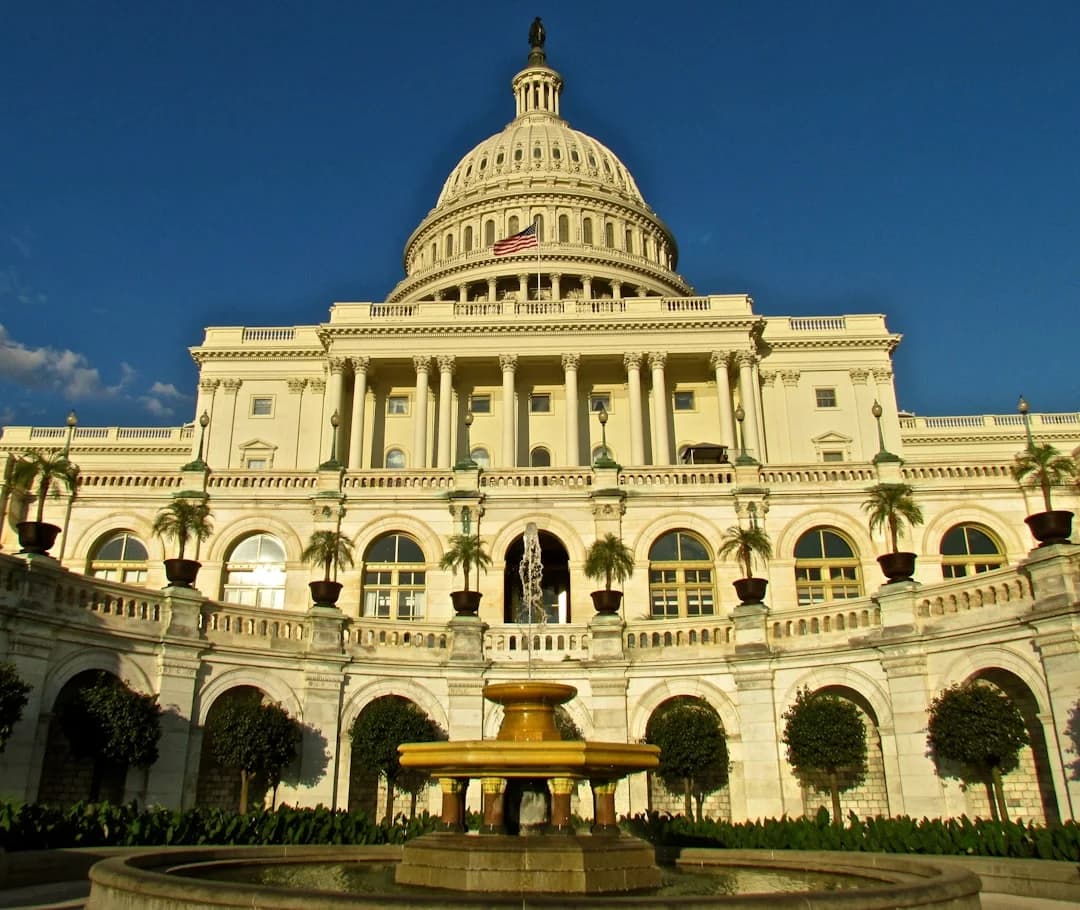
Photo by Suzy Brooks on Unsplash
The District of Columbia finds itself at a pivotal moment in its long-running relationship with Congress over home rule. In 2025, the D.C. Council enacted a temporary measure to decouple the District’s local tax code from parts of the federal tax changes known as the One Big Beautiful Bill. The goal was to protect local revenue and fund targeted credits for families and workers. By February 2026, Congress weighed in with a disapproval resolution that blocks that local tax shift, triggering a complex legal and fiscal cascade that will unfold through 2026 and beyond. This developing story matters for taxpayers, local governments, and policy researchers who track how the District asserts fiscal autonomy within the federal framework. The situation — framed by the phrase D.C. tax policy home rule 2026 — has already produced an unusual blend of urgent administrative adjustments, courtroom-level questions, and a spirited public policy debate about what home rule should look like in practice.
As the District presses ahead, the immediate question for residents and employers is what the disapproval means for the 2026 tax filing season and how DC’s budget will navigate the revenue shift. Early analyses suggest a potential revenue impact of roughly $600 million through 2029 if Congress maintains its disapproval, a figure that District officials argue could threaten funded programs and delay local tax credits designed to reduce child poverty and support working families. The number has been the subject of intense debate among policymakers, economists, and advocacy groups, with local observers cautioning that the practical effects could extend far beyond a single filing season and could ripple into the city’s credit outlook and investment climate. The law’s effective date — February 12, 2026 — anchors a timeline that will see legal interpretations tested in the courts and debated in the halls of Congress, the District’s Council, and the mayor’s office. (washingtonpost.com)
Opening paragraph recap: The core news is that Congress stepped in to block the D.C. Council’s decision to decouple from Trump-era federal tax changes, a move the administration and District budget officials had hoped would bolster revenue and broaden local credits. The immediate consequence is a potential mid-tax-season disruption and a measurable impact on the city’s revenue projections. As of late February 2026, the District is navigating a legally unsettled landscape that questions whether Congress acted within its Home Rule Act review window, while also preparing for the administrative work of revising forms, systems, and guidance to reflect a change in direction. The broader context is the ongoing tension between local self-government and federal oversight in the District’s unique constitutional status. (washingtonpost.com)
What Happened
The Decoupling Move and Its Immediate Rationale
In late 2025, the District of Columbia Council approved a temporary act intended to disconnect the District’s income tax structure from a set of federal tax provisions enacted under President Trump. The measure, formally titled the D.C. Income and Franchise Tax Conformity and Revision Temporary Amendment Act of 2025, was designed to preserve local revenue and to fund a local child tax credit and an expanded Earned Income Tax Credit (EITC). District officials projected that this decoupling would generate roughly $600 million in additional revenue through 2029, a sum they planned to channel toward poverty-reduction initiatives and other local priorities. The decision was framed by officials as an effort to protect District fiscal autonomy and to preserve targeted social support for residents, particularly working families and children in poverty. The decoupling was transmitted to Congress at the end of December 2025 and became law in the District after the Council’s vote in November 2025, with the plan to allow local funds to support the new credits. (washingtonpost.com)
In this context, the key legal interplay is the District’s Home Rule Act authority. Under the 1973 Home Rule Act, Congress reviews D.C. Council legislation before it takes effect, commonly within a 30-day window (some criminal-justice measures enjoy a 60-day window). Congress can disapprove a local law with a joint resolution, which would nullify the law. The District’s practice, history, and the specifics of this review window have been central to how the current dispute unfolded. The District’s 30-day clock is a standard feature of the Home Rule framework, and this case marks one of the few occasions in the District’s half-century history where Congress formally disapproved a locally enacted policy with revenue implications. (washingtonpost.com)
Congressional Action and Revenue Implications
In early February 2026, the U.S. House of Representatives moved to block the DC decoupling measure, joining the Senate in voting to disapprove the District’s local tax changes. The measure, H.J. Res. 142 (the joint disapproval resolution), would require the District to conform to federal tax changes for its local taxes — effectively nullifying the District’s move to preserve a separate local tax code. The congressional action was framed by supporters as a means to ensure uniform tax benefits at the federal level, but city officials warned it would impose significant administrative burdens and reduce anticipated local revenue. The House vote, followed by a Senate process, set in motion a sequence of practical implications for tax administration, including potential changes to forms and filing deadlines if the tax code changes were implemented midseason. The Washington Post reported on a potential mid-season disruption and the predicted revenue impact of about $600 million through 2029. (washingtonpost.com)
The timing of congressional action, and the interpretation of the Home Rule Act’s 30-day window, became a central legal question. Congress counted the review period differently than the District, creating a dispute over whether the disapproval resolution was timely. The District’s position, reinforced by its Attorney General, has been that Congress acted on the 31st legislative day, one day past the statutory window, which would render the disapproval ineffective or purely symbolic. This timing dispute is not merely procedural; it has direct consequences for the District’s budget, tax administration, and the continuity of local credits and exemptions negotiated by the Council. (washingtonpost.com)
The Timing Debate and Legal Questions
The heart of the current legal debate centers on whether Congress adhered to the 30-day (or in some cases 60-day) window for reviewing DC legislation, and whether the Act’s disapproval could apply retroactively or affect taxes already filed. The District’s attorney general has argued that Congress missed the deadline and that the disapproval resolution lacks retroactive effect, given that 2025 tax season had already begun when Congress acted. In practical terms, this means DC taxpayers could proceed under the District’s tax rules for the 2025 tax year, while the legal question about the disapproval’s scope remains unresolved. The legal opinion from the District’s attorney general emphasized that Congress does not automatically repeal local tax laws simply by disapproving them after the review window, and that the disapproval can be treated as a symbolic expression rather than an effective repeal. The case is a uniquely modern example of how the Home Rule framework interacts with contemporary tax policy and tax administration. (washingtonpost.com)
The legal framework behind this dispute is not static. The District has pointed to the Home Rule Act as the basis for its authority to set local tax policy, while Congress asserts its constitutional authority to review and, if necessary, overturn District laws that affect federal spending and governance. In the interim, the District’s fiscal officers have warned that any sudden reversal of the decoupling could require a substantial reprogramming of tax processing systems, revisions to forms, and extensive guidance for taxpayers and third-party processors. These operational considerations, while technical, carry real costs and could impact filing timelines and refunds. (washingtonpost.com)
Why It Matters
Fiscal Implications for DC Budget and Local Priorities

The central fiscal consequence of Congress’s disapproval is the potential loss of local revenue the District had projected to fund core programs and credits. Projections from District officials estimate roughly $600 million in revenue at risk through 2029 if the disapproval remains in place. This figure is frequently cited by District leaders and financial officers in assessing the potential impact on the budget, including funding for the expanded EITC and the local Child Tax Credit (CTC). The 600-million-dollar figure is reported consistently across major outlets and is tied to the decoupling’s design to preserve local revenue streams that would otherwise be constrained by federal tax conformity. The revenue impact is a touchstone in broader debates about the District’s fiscal autonomy and its ability to shape tax policy to address local priorities. The nexus of policy and revenue here is a telling example of how home-rule dynamics translate into real budgetary considerations for city services, schools, housing, and social programs. (washingtonpost.com)
Beyond the headline figure, analysts point to a more nuanced fiscal landscape. Some forecasts suggested that the decoupling would not only preserve revenue but also allow targeted investments in child poverty reduction and the EITC expansion, potentially reducing child poverty by as much as 20% in city subpopulations based on analyses commissioned by local policy institutes. The actual realized gains depend on how Congress’s disapproval interacts with the District’s administrative machinery and whether any retroactive effects complicate taxpayers’ filings. In this broader context, the debate touches on questions about the appropriate balance between local policy experimentation and the federal oversight that underpins the District’s unique status. (washingtonpost.com)
A parallel line of analysis focuses on the risk to the city’s budget planning and credit outlook. Financial observers highlighted that a revenue shortfall or the appearance of fiscal instability could affect the District’s credit ratings and borrowing costs if the revenue stream that supports local programs becomes uncertain. The Street-level impact includes the possibility of delayed capital projects or tighter-year budget adjustments if revenue projections deteriorate due to any policy reversal. The Washington Post highlighted that this is not simply a mechanical tax policy dispute but a question of how the city can sustain existing services, protect vulnerable populations, and maintain the competitiveness of the District as a place to live and do business under a scenario of revenue volatility. (washingtonpost.com)
Impact on Tax Filers, Businesses, and Administration
Tax administration in the District is the frontline for the practical effects of the disapproval. If Congress’s disapproval stands, the District would be required to conform more closely to federal tax provisions for local taxes, potentially negating local credits and exemptions that had been enacted to support local needs. The CFO’s office warned that changes to the tax code midseason would require updating forms, reprogramming tax processing systems, and communicating new guidance to taxpayers and to third-party vendors such as TurboTax or H&R Block. The operational implications could lead to filing delays, additional costs, and a potential cascade of superseding returns if taxpayers need to refile to capture benefits under the new framework. In the short term, filers who submitted returns under the District’s decoupled framework might face questions about re-filing, additional messaging from the Office of Tax and Revenue, and potential modifications to refund timing. The administrative burden is a practical reminder of how high-level policy decisions translate into day-to-day experiences for residents and local businesses. (washingtonpost.com)
Analysts also explored the distributional effects of decoupling versus conformity. Proponents emphasized that the local credits — such as the local Child Tax Credit and the expanded EITC — were designed to anchor support for families and reduce poverty, particularly in a city with concentrated poverty and acute housing and child care costs. Critics argued that conformity with federal tax changes could simplify administration and align the District with nationwide practices, potentially delivering uniform benefits but at the cost of local flexibility. The debate, therefore, sits at the intersection of fiscal policy design and equity considerations: should a local government leverage its autonomy to tailor relief programs for local residents, or should it align with national tax policy to simplify filings and standardize benefits? The current developments illustrate how this tension plays out in real time, with data-driven voices on both sides. (washingtonpost.com)
The Home Rule Era and Federal Oversight
The broader policy conversation around D.C. home rule is not new. The District’s status — a federal district with local governance but subject to Congressional oversight — has prompted repeated debates about autonomy versus federal oversight. The 2025–2026 episode highlights how the Home Rule Act’s mechanisms interact with aggressive oversight in a politically charged environment. Some observers frame the episode as a test of the modern application of home-rule principles and a bellwether for how the city can pursue independent tax policy while managing the realities of federal oversight. Others contend that the chain of authority remains clearly delineated: Congress has authority to review and disapprove local laws and can, in certain cases, override local policy decisions that have broad fiscal consequences. The outcome of this period’s debates could influence future considerations of how the District structures its tax policy framework and how it communicates policy choices to residents and businesses. (congress.gov)
What's Next
Courtroom, Congress, and Administrative Pathways
The next phase of the D.C. tax policy home rule 2026 story is likely to feature court challenges, evolving legislative maneuvering, and administrative readiness. The District’s attorney general signaled the possibility of legal action or formal challenges if Congress maintains its disapproval and if questions persist about the enforceability of the disapproval within the Home Rule Act’s review window. In parallel, Congress could pursue alternative legislative paths to address the issue, including reconsideration of the disapproval resolution or the adoption of refined procedures under proposed updates to the Home Rule framework. The policy conversation may also shift toward precision in the 2025–2026 legislative window and the potential for interim guidance to taxpayers as more is learned about the precise implications of the disapproval for individual tax filers and local businesses. The current moment thus represents a crossroad with potential legal, fiscal, and administrative consequences that will unfold over the coming months. (washingtonpost.com)
Timeline and Watchpoints
- December 2025: D.C. Council passes the temporary decoupling measure and transmits it to Congress for review. This step sets the stage for the federal review under the Home Rule framework. The measure was designed to take effect in early 2026, with the District planning to deploy local tax credits such as an expanded EITC and a local Child Tax Credit funded by the increased revenue. (washingtonpost.com)
- February 3–12, 2026: The U.S. House and Senate consider the disapproval resolution, with proceedings that could determine whether the District adheres to its decoupled tax framework or reverts to conformity with federal tax provisions for its local tax code. The House’s action on February 4, 2026, and subsequent Senate actions add to the timing pressure facing the District. The potential for midseason administrative disruption creates a sense of urgency for local officials and taxpayers. (washingtonpost.com)
- February 12, 2026: The decoupling measure collects legal status as a matter of District law and begins to operate under a framework that would have preserved local revenue, including the local credit programs. The timing of this date is central to the legal questions surrounding the Home Rule Act’s review window and whether Congress acted within its constitutional authority. (code.dccouncil.gov)
- February 24, 2026 and beyond: The District’s legal posture and the Congress’s disapproval are tested in court-like or administrative settings as the AG issues formal opinions and as the District considers next steps in litigation or policy modification. The legal debate over the 30-day review window continues to shape the narrative about home rule’s boundaries and the practical consequences for residents. (washingtonpost.com)
What’s next for DC taxpayers and policymakers will hinge on further developments in court actions, potential changes to the Home Rule Act, and the District’s ability to implement or adjust to whichever policy stance continues to govern the local tax code. Observers will closely watch the timeline of potential court filings, any new congressional actions, and the District’s budget projections as the fiscal year advances and the city’s credit outlook remains under review. The coming months will be critical for understanding how the District reconciles local needs with federal oversight, a question front and center in the ongoing conversation about D.C. tax policy home rule 2026. (congress.gov)
Closing
The District of Columbia’s 2026 tax policy moment stands at the crossroads of local policy ambition and federal oversight. While the immediate headlines focus on the potential loss of roughly $600 million in revenue through 2029 and on the operational hiccups that a midseason policy reversal could trigger, the longer arc concerns the future of home rule itself. Will Congress allow DC to pursue tailored tax policies that reflect local priorities, or will it insist on federal conformity with broader tax provisions that apply nationwide? The answer will influence not only the District’s budget and social programs but also the broader conversation about governance in a federal district that sits at the intersection of national and local interests.

As the District’s Office of Tax and Revenue and the CFO navigate the administrative path ahead, readers and stakeholders should stay tuned for updates on the legal status of the disapproval, any forthcoming court action, and the District’s revised planning documents. The latest developments in D.C. tax policy home rule 2026 demonstrate that this is not merely a budget issue but a constitutional and political question with real consequences for families, workers, and businesses across the District. For ongoing coverage, District residents and observers can follow official statements from the Office of the Attorney General, the Office of Tax and Revenue, and the Council, as well as analyses from independent policy institutes and national outlets that monitor home-rule dynamics and state-like tax policy experiments in the District. (washingtonpost.com)